Source Industrial Equipment Universal Motor for Vacuum Cleaners
Find and compare 30 industrial equipment universal motor options tailored for vacuum cleaner applications. Evaluate specifications such as rated voltage, casing protection, and efficiency classes to identify suitable suppliers for your sourcing needs; compare the available evidence and request quotations based on your requirements.
Key considerations
Products List




Comprehensive Sourcing Guide
Industrial Equipment Universal Motor Sourcing Guide
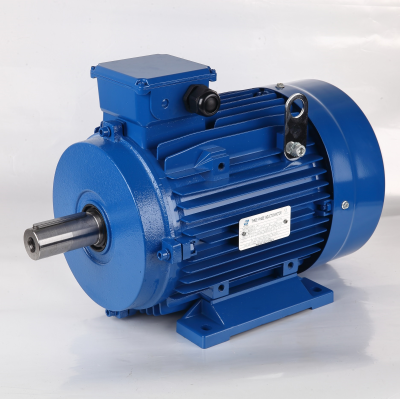
Procuring industrial equipment universal motors requires distinguishing between high-speed vacuum applications and heavy-duty three-phase industrial drives, as the supplied data reveals distinct product categories under this keyword. Buyers must verify whether the listing refers to a compact 220-240V unit for cleaning appliances or a robust 380-660V three-phase motor designed for constant speed industrial machinery. The presence of specific model series like Y2 or V1Z-L22 indicates a specialized manufacturing focus that dictates the appropriate application environment and performance expectations.
Sourcing decisions should prioritize the specific operating voltage and phase requirements to ensure compatibility with existing facility infrastructure. The observed listings show a wide range of rated powers from 0.12kW to 1000kW, necessitating a precise match between the motor's rated power and the mechanical load it will drive. Misidentifying the motor type can lead to operational failures, as the squirrel-cage rotor structure and direct-on-line starting mode are optimized for specific industrial duties rather than variable speed consumer applications.
Product Scope and Observed Listing Signals
The market data indicates a clear bifurcation in product scope, ranging from vacuum cleaner motors with customized casings to heavy industrial motors featuring cast iron casings and IP54 to IP65 protection grades. Buyers should scrutinize the "Driving" function attribute to confirm the motor is intended for mechanical power transmission rather than auxiliary functions. The observed price range of 1.5 to 50,000 USD reflects this diversity, where low-cost units serve light-duty tasks while high-end models support massive industrial loads with varying efficiency classes.
Listing signals such as "New" condition and "Pallet" or "Wooden Case" packaging suggest the products are ready for immediate deployment in manufacturing or facility settings. The availability of customization options allows buyers to tailor nameplates and specific configurations to unique operational needs. However, the presence of "Short" lead times alongside standard export packing implies that while availability is high, the specific configuration requested must be confirmed to avoid delays in receiving the exact model required for the project.
Technical Specifications to Verify
Technical verification must begin with the electrical input parameters, specifically confirming the rated voltage matches the facility supply, which ranges from 220V to 660V across different models. Buyers need to validate the number of poles, which can vary from 2 to 16, as this directly determines the rotating speed and torque characteristics essential for the intended application. The frequency rating of 50/60Hz is another critical parameter that must align with the local grid to prevent overheating or inefficient operation of the three-phase stator.
Efficiency and insulation class are equally vital for long-term reliability, with observed options including IE1, IE2, and IE3 efficiency standards alongside B, F, or H insulation classes. The working duty of S1 indicates continuous operation capability, but buyers must ensure the cooling method, such as IC411 or IC416, suits the ambient environment of the installation site. Verifying the winding material as 100% copper wire is essential to guarantee conductivity and thermal performance, distinguishing high-quality units from those with inferior alternatives.
Compliance and Safety Documentation
Compliance verification requires checking for recognized certifications such as CCC and CE, which are explicitly mentioned in the product attributes for certain models. These certifications indicate adherence to specific safety and electromagnetic compatibility standards, which is crucial for importing equipment into regulated markets. Buyers should request the actual certificate documents to confirm that the specific batch of motors meets the required national or international safety protocols before finalizing the purchase order.
Safety documentation must also include detailed information on the protection grade, with observed ratings ranging from IP54 to IP65, ensuring the motor is suitable for its intended environment. The closed-type casing protection and specific mounting types like B3 or B5 must be documented to ensure the motor can be safely integrated into the machinery frame. Without these verified safety documents, the risk of non-compliance with local industrial safety regulations increases significantly, potentially leading to operational shutdowns or legal liabilities.
Cost Drivers and Commercial Terms
Cost drivers in this sector are heavily influenced by the rated power, efficiency class, and the complexity of the casing material, such as cast iron versus lighter alternatives. The observed MOQ of 1 set to 1000 units allows for flexibility, but bulk purchasing often yields better commercial terms for large industrial projects. Buyers should analyze the total cost of ownership, considering that higher efficiency motors like IE3 or IE4 may have a higher upfront cost but offer significant energy savings over the 12-month warranty period and beyond.
Commercial terms must clearly define the lead time, which is noted as short in the listings, and the specific packaging requirements like wooden cases for heavy units. The warranty period of 12 months and the availability of 24-hour after-sales service are key value propositions that should be formalized in the contract. Buyers should negotiate payment terms that align with the production schedule, ensuring that the supplier can meet the short lead time without compromising on the quality of the 100% copper wire windings.
Supplier Qualification and Quality Control
Supplier qualification should focus on their ability to provide engineer technical support and their track record with the specific motor series like Y2 or YE3. The presence of a dedicated support team and a 24-hour response time for after-sales service indicates a supplier capable of handling complex industrial integration issues. Buyers must verify the supplier's origin, specifically noting the Shandong, China location, to understand the logistical implications and the manufacturing capabilities associated with that region.
Quality control processes must be validated through the supplier's adherence to standardized production methods and the availability of test results for the specific models. The observation of customized standards suggests that the supplier has the flexibility to meet unique buyer requirements, but this must be backed by rigorous internal quality checks. Buyers should request a quality assurance plan that details how the insulation class, protection grade, and winding integrity are verified before the product leaves the factory.
Long-Term Procurement Checks
Long-term procurement success depends on establishing a reliable supply chain for spare parts and ensuring consistent quality across multiple orders. The availability of customization for nameplates and specific configurations suggests a partnership model where the supplier can adapt to evolving operational needs over time. Buyers should maintain a relationship with the supplier to ensure that the 12-month warranty and technical support remain accessible as the equipment ages and requires maintenance.
Regular performance audits are necessary to verify that the motors continue to meet the specified efficiency and speed requirements after extended operation. The constant speed operation and specific rotating speeds like 1480rpm must be monitored to detect any degradation in performance that could indicate manufacturing defects or wear. Establishing a feedback loop with the supplier allows for early detection of issues, ensuring that the industrial equipment remains operational and efficient throughout its intended service life.
FAQs
What is the rated voltage for these industrial motors?
The rated voltage is 220-240V for specific vacuum cleaner applications, while industrial three-phase models operate at 380/400/440/660V. These motors support 50/60Hz frequency and feature squirrel-cage rotors with direct on-line starting modes for reliable performance in various industrial settings.
Can I customize the motor specifications for my needs?
Yes, customization is available for these motors. Buyers can select from various pole counts, insulation classes, and protection grades like IP54 to IP65. The product standard is customized, allowing for tailored solutions including specific casing types and mounting options to fit unique operational requirements.
Which certifications do these motors hold?
These motors hold CE and CCC certifications, ensuring compliance with international and regional safety standards. The manufacturing process also adheres to ISO standards, providing assurance of quality and reliability for industrial applications. These certifications are critical for buyers requiring verified product safety and performance metrics.
What is the minimum order quantity for these motors?
The minimum order quantity is 1 set, making it accessible for small-scale procurement. This low MOQ allows buyers to test product quality before committing to larger orders. It supports flexible sourcing strategies for businesses needing specific industrial motor components without significant initial inventory investment.
How long is the warranty period for these motors?
The warranty period is 12 months, covering manufacturing defects and performance issues. Buyers also receive 24-hour after-sales service and engineer technical support. This comprehensive support ensures operational continuity and quick resolution of any technical challenges encountered during the motor's deployment in industrial environments.
What is the lead time for these industrial motors?
The lead time is short, facilitating rapid procurement and deployment. This efficiency is crucial for maintaining production schedules in industrial settings. Buyers can expect timely delivery, supported by standardized export packing and wooden case options, ensuring product safety during transit from the manufacturing facility in China.